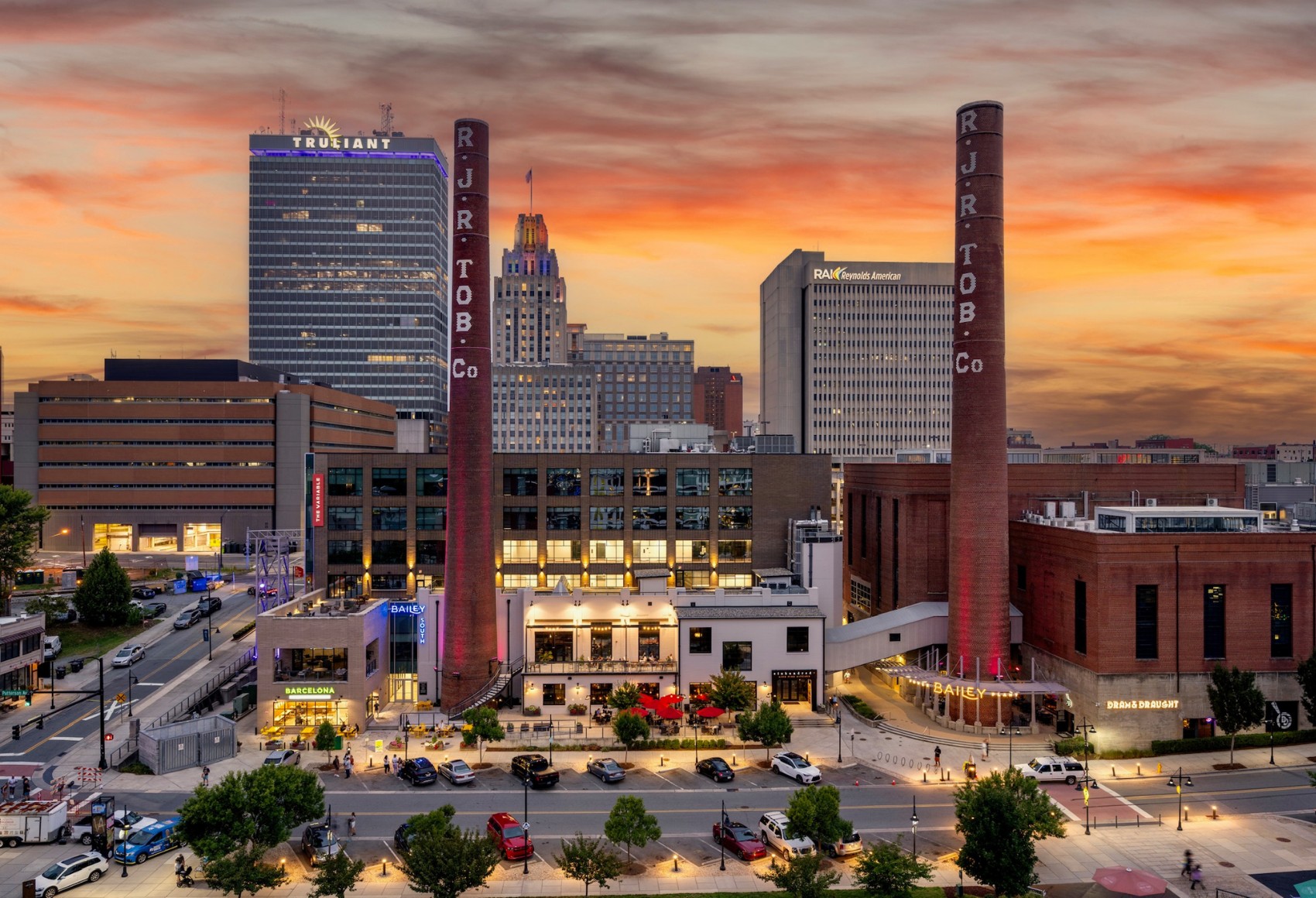
When the Brookings Institution released the report “The Rise of Innovation Districts” in 2014, it heralded a global explosion. Today, innovation districts exist in over 150 cities worldwide. From Barcelona to Bogotá, from New South Wales to North Carolina, innovation districts shape local communities and drive innovation.
But what is an innovation district? And how do they contribute to their local communities? Take a deeper look into what differentiates innovation districts from other endeavors and get a glimpse into what the next generation of districts might look like.
What are Innovation Districts?

Innovation districts are geographic areas within urban settings that bring academic, healthcare or other large institutions into proximity with startups, small businesses, entrepreneurs and support businesses for the purpose of fostering collaboration and knowledge-sharing that advances science, technology and other innovation-driven endeavors.
A hallmark of innovation districts is that they often include mixed-use real estate, which is space dedicated to enhancing a lifestyle, including apartments, restaurants, retail businesses and outdoor spaces.
The Characteristics of Innovation Districts
Not all innovation districts are built the same. In fact, the Global Institute on Innovation Districts (GIID), an international non-profit focused on the impact of innovation districts, records four different models that innovation districts typically build around.
There are certain characteristics, however, that the majority of innovation districts share.
Purpose

As the name suggests, the underlying goal of innovation districts is to drive innovation. What aspect of “innovation” a district focuses on varies, from uCity Square in Philadelphia, Pennsylvania that includes a focus on immunotherapies to Tonsley Innovation District in Adelaide, Australia that has an emphasis in reimagining traditional manufacturing.
Innovation districts don’t happen by accident. They are the result of years of planning by a host of groups, including academic institutions, corporations, local governments and more.
Density
The name of the game for innovation districts is density. Innovation happens when collaboration occurs, so an innovation district needs to bring diverse people, skillsets and perspectives into close proximity. The physical location of businesses, researchers, students and individuals close to each other is key to creating those collaborations. To create density, many innovation districts develop in downtown and urban areas that attract people.
Kendall Square in Cambridge, Massachusetts is located on one square mile near Massachusetts Institute of Technology. A dense cluster of life science and information technology companies has grown up around the academic institution. The Kendall Square Association was developed to foster greater connection between the people and companies who exist in close proximity to the illustrious university.
Anchor Institutions
For many innovation districts, anchor institutions drive density by attracting people to a particular location. Typically larger in size, these anchor institutions bring stability and longevity. Examples include academic institutions, established companies and medical research organizations.

In downtown Winston-Salem, North Carolina, the Innovation Quarter (iQ) developed through a strategic partnership with Wake Forest University School of Medicine (WFUSM) that anchors the district through many of its academic and research departments. When WFUSM began a strategic partnership with Atrium Health (which is now part of Advocate Health) in 2019, the collaboration opened more opportunities for innovation to grow out of the district through Advocate’s national reach. WFUSM now serves as the academic core of Advocate Health.
Mixed-Use Real Estate
Most innovation districts provide more than just space to work. They also provide amenities that help promote a lifestyle, through places to live, socialize and exercise. Innovation districts often carve out space for events, restaurants, gyms and outdoor green space to create room for people to live, not just work.
The Cortex Innovation District in St. Louis created a hub for research and entrepreneurship in what used to be defunct industrial space. Now, the innovation district provides numerous restaurants, coffee shops, gyms and hotels along with a robust event schedule that provides a mix of entrepreneurial programs, office hours, gentle yoga, lunch and learns, food trucks and a vegan market. All this supports a vibrant district that spills over into neighboring communities.
Revitalized Areas
Some innovation districts make use of older, unused buildings or areas previously used by other industries that have died out. By revitalizing these areas, innovation districts contribute to the economic development of their communities, as well as sustainability. Redevelopment presents an opportunity to build sustainable practices – reducing carbon emissions, increasing green space, improving public transport and developing water recycling processes.
South Lake Union in Seattle, Washington, was developed in a warehouse district on Lake Union that is home to a thriving innovation district marked by technology and life science companies. In a place once populated by sawmills, now historic buildings have been remade into 170 acres of commercial and residential properties known for numerous transit options.
The Benefits of Innovation Districts
The existence of innovation districts brings a number of tangible and intangible benefits to a community–and sometimes to the world as a whole. What do innovation districts do for the community? For research? For innovation? Let’s take a look.

Increase Knowledge Sharing
Innovation districts bring into contact experts in many areas who bring with them a diversity of perspectives and backgrounds. Putting all these people in one place allows easier knowledge translation and sharing. Even in a very virtual world, physical proximity breaks down barriers to collaboration.
Innovation districts can also convene people across cities and regions to solve community issues. In that way, knowledge sharing happens through community development.
Drive Economic Growth

Innovation districts attract companies that drive the economic growth of the city and region surrounding the district. The resources of an innovation district can help grow local companies as well as bring in outside funding through new companies relocating, entrepreneurship or investors, contributing to a groundswell of growth.
In addition to the research-oriented companies drawn to innovation districts, many other companies grow up around them. These businesses include legal, information technology and other support services, as well as hospitality businesses and restaurants, coffee shops and bars.
Improve Economic Access
As innovation districts develop, the need for skilled workers increases. This correlation stimulates the development of workforce development programs and other initiatives to create on-ramps for the larger community to participate in the growth. These programs help workers develop the skillsets needed to contribute to growing industries.
Additionally, growing companies require larger numbers of employees in all positions. This drives the need for a larger workforce, which contributes to a stronger local economy.
Address Societal Issues
While more aspirational in nature, innovation districts can contribute to solutions to wider societal issues. By bringing innovators and problem-solvers into collaboration with each other, innovation districts can be the site of cutting-edge work on issues like energy solutions, housing needs, food shortages and cures for infectious diseases.
The Future of Innovation Districts
As innovation districts proliferate around the world, they are reimagining ways to accelerate connection and collaboration.
Advocate Health is one of the only organizations in the world supporting the development of two distinct innovation districts that, while located in separate markets, share common foundations such as an anchor educational institution and a focus on innovation-driven growth.

For its latest development in innovation, Advocate Health looked at its headquarter city, Charlotte, North Carolina, one of the fastest-growing regions in the United States. In 2025, Atrium Health (part of Advocate Health) and Wexford Science & Technology – the same partnership behind the Innovation Quarter (iQ) in Winston-Salem – launched a new innovation district in Midtown Charlotte called The Pearl.
The shared development partners of the iQ and The Pearl decided to grow the educational arm of the iQ, Wake Forest University School of Medicine (WFUSM), into Charlotte. This expansion brought Charlotte its first four-year medical school campus and extended WFUSM’s reach across the Southeast, creating more avenues for people to enter the medical field. It also expanded opportunities for crucial research and development to tap into resources of the Charlotte area.
For example, IRCAD, a leading institute for advanced surgical training and research, chose The Pearl as its North American headquarters because of its proximity to medical startups, the corporate partnerships available in the city and Charlotte’s thriving international airport.
The combination of entities like IRCAD North America and WFUSM growing alongside each other creates a strong hub for medical research in the heart of Charlotte, supported by the rich history of academics and research coming out of Winston-Salem. In turn, Winston-Salem benefits through seamless access to the resources growing in this new location.
The partnership of sister districts – the iQ and The Pearl – leverages their shared resources, expertise and programming to accelerate growth in each of their respective communities and create new opportunities for innovation across the healthcare industry.
Rising to New Heights
Innovation districts create wide-ranging benefits in an increasingly global market that demands a diversity of thought to solve modern problems. Furthermore, revitalized urban areas are creatively being developed as drivers of innovation in a number of ways, while also breathing new life into declining geographies.
To learn more about the iQ, its history and its future as an innovation district, dig deeper into the mission of the iQ and stay updated with the latest stories coming out of the innovation district.